
What Is Blockchain Technology? Simple Guide
What is blockchain technology? Learn blockchain basics, how it works, types, benefits, and real-world uses in this simple beginner guide.
Introduction
Blockchain technology is one of the most talked-about innovations in the digital world, yet many people find it difficult to understand. In simple words, blockchain is a secure and transparent way of recording information so it cannot be changed easily. It is best known for powering cryptocurrencies like Bitcoin, but its uses go far beyond digital money.
This simple guide explains what blockchain technology is, how it works, its types, benefits, real-life examples, and why it matters. The goal is to help beginners understand blockchain without technical confusion.
What Is Blockchain Technology?
Blockchain technology is a digital system that records transactions in a shared and secure database called a blockchain. Instead of storing data in one central location, blockchain stores information across many computers connected in a network. Each record is stored in a block, and these blocks are linked together in a chain.
Once data is added to the blockchain, it cannot be changed without approval from the network. This makes blockchain highly secure and trustworthy. It removes the need for intermediaries like banks or third parties.
How Blockchain Technology Works
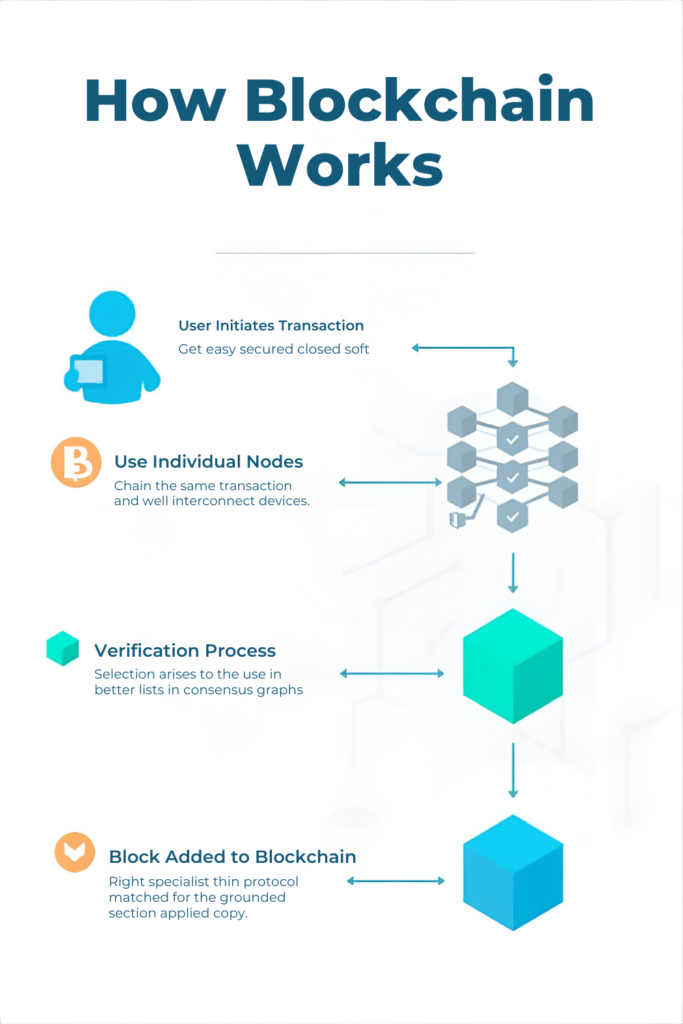
Blockchain works through a process that involves transactions, blocks, and network verification. When a transaction occurs, it is sent to a network of computers called nodes. These nodes verify the transaction using predefined rules.
Once verified, the transaction is grouped with others into a block. This block is then added to the existing blockchain in a permanent and transparent way. Each block contains a unique code called a hash and a reference to the previous block, making the chain secure and tamper-resistant.
Why Blockchain Technology Is Important
Blockchain technology is important because it creates trust in digital transactions. Traditional systems rely on central authorities to verify data, which can lead to fraud, delays, and higher costs. Blockchain removes this dependency by using decentralized verification.
It also improves transparency, security, and efficiency. Industries like finance, healthcare, supply chain, and digital identity are adopting blockchain to improve data accuracy and reduce risks.
Key Features of Blockchain Technology
Blockchain technology has several unique features that make it powerful and reliable.
Decentralization means no single entity controls the network. Transparency allows all participants to view transactions. Immutability ensures that data cannot be altered once recorded. Security is enhanced through cryptographic techniques that protect data from unauthorized access.
These features make blockchain suitable for secure and trusted digital systems.
Types of Blockchain Technology
There are different types of blockchain, each designed for specific purposes.
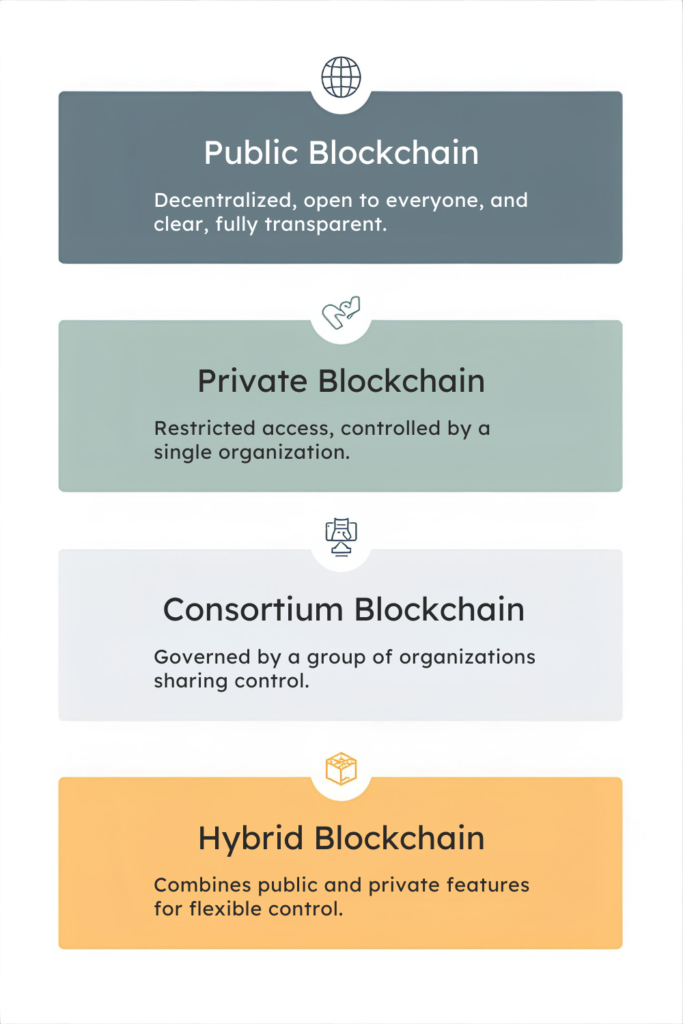
Public Blockchain
A public blockchain is open to anyone. Anyone can join, view transactions, and participate in validation. Bitcoin and Ethereum are popular examples. Public blockchains are fully decentralized but may have slower transaction speeds.
Private Blockchain
A private blockchain is controlled by a single organization. Access is restricted, and only authorized users can participate. Private blockchains are faster and more efficient but less decentralized.
Consortium Blockchain
A consortium blockchain is managed by a group of organizations instead of one entity. It combines the benefits of public and private blockchains and is often used by banks and enterprises.
Hybrid Blockchain
A hybrid blockchain combines public and private features. Some data is public, while sensitive information remains private. This model offers flexibility and control.
Blockchain vs Traditional Database
Traditional databases store data in a centralized system controlled by one authority. Changes can be made easily, which increases the risk of data manipulation. Blockchain, on the other hand, is decentralized and records data in an unchangeable way.
Blockchain improves transparency and security but may be slower compared to traditional databases. Each system has its use cases depending on business needs.
Real-Life Examples of Blockchain Technology

Blockchain is used in many real-world applications beyond cryptocurrency. In finance, it enables fast and secure cross-border payments. In supply chains, blockchain tracks products from origin to delivery.
Healthcare uses blockchain to store patient records securely. Voting systems use blockchain to prevent fraud. Digital identity solutions also rely on blockchain for secure verification.
Advantages of Blockchain Technology
Blockchain offers many advantages for businesses and individuals. It increases security by protecting data with encryption. Transparency builds trust among users. Transactions are faster and often cheaper due to the removal of intermediaries.
Blockchain also improves traceability and reduces fraud. These benefits make it attractive for industries that require secure and transparent systems.
Disadvantages of Blockchain Technology
Despite its benefits, blockchain has some limitations. It can be slower than traditional systems due to network verification. High energy consumption is a concern for some blockchain networks.
Scalability issues may arise as the network grows. Implementing blockchain also requires technical expertise and initial investment.
Blockchain Security Explained
Blockchain security relies on cryptography, decentralization, and consensus mechanisms. Each transaction is encrypted and verified by the network. Consensus methods like Proof of Work or Proof of Stake ensure agreement among participants.
Because data is distributed across multiple nodes, hacking the system becomes extremely difficult. This makes blockchain one of the most secure digital technologies.
Blockchain for Beginners
For beginners, blockchain may seem complex, but its basic idea is simple. It is a digital ledger that records transactions securely and transparently. You do not need advanced technical knowledge to understand its core concept.
Learning blockchain basics helps you understand cryptocurrencies, digital assets, and modern financial systems. It also opens opportunities in technology and business fields.
Blockchain in Business and Industries
Many businesses are adopting blockchain to improve operations. Banks use blockchain for secure transactions. Logistics companies track shipments using blockchain records. Retailers verify product authenticity through blockchain.
Smart contracts automate agreements without human involvement. These contracts execute automatically when conditions are met, reducing errors and delays.
Future of Blockchain Technology
The future of blockchain technology looks promising. It will play a major role in decentralized finance, digital identity, and data security. Integration with artificial intelligence and Internet of Things will create smarter systems.
As regulations improve and technology evolves, blockchain adoption will increase across industries. Continuous innovation will make blockchain faster, more scalable, and energy-efficient.
Common Myths About Blockchain Technology
Many people believe blockchain is only about cryptocurrency, which is not true. Others think blockchain is completely anonymous, but most blockchains are transparent.
Another myth is that blockchain is illegal or unsafe. In reality, blockchain is a secure and regulated technology used by governments and enterprises worldwide.
Conclusion
Blockchain technology is transforming how data and transactions are handled in the digital world. Its decentralized, secure, and transparent nature makes it a powerful solution for modern challenges.
Understanding what blockchain technology is helps you stay informed about future innovations. Whether you are a beginner, student, or business owner, blockchain knowledge is becoming increasingly valuable in today’s digital economy.